Plant details
| Altezza a maturità | |
|---|---|
| Crescita | Moderate |
| Esposizione | |
| Fogliame | Deciduous |
| Manutenzione | |
| Uso consigliato | Large areas/parks |
| Portamento | |
| Resistenze | |
| Terreno | Acidic, Clayey, Deep, Well-drained |
Fill out the form with your request, and we will get back to you as soon as possible.
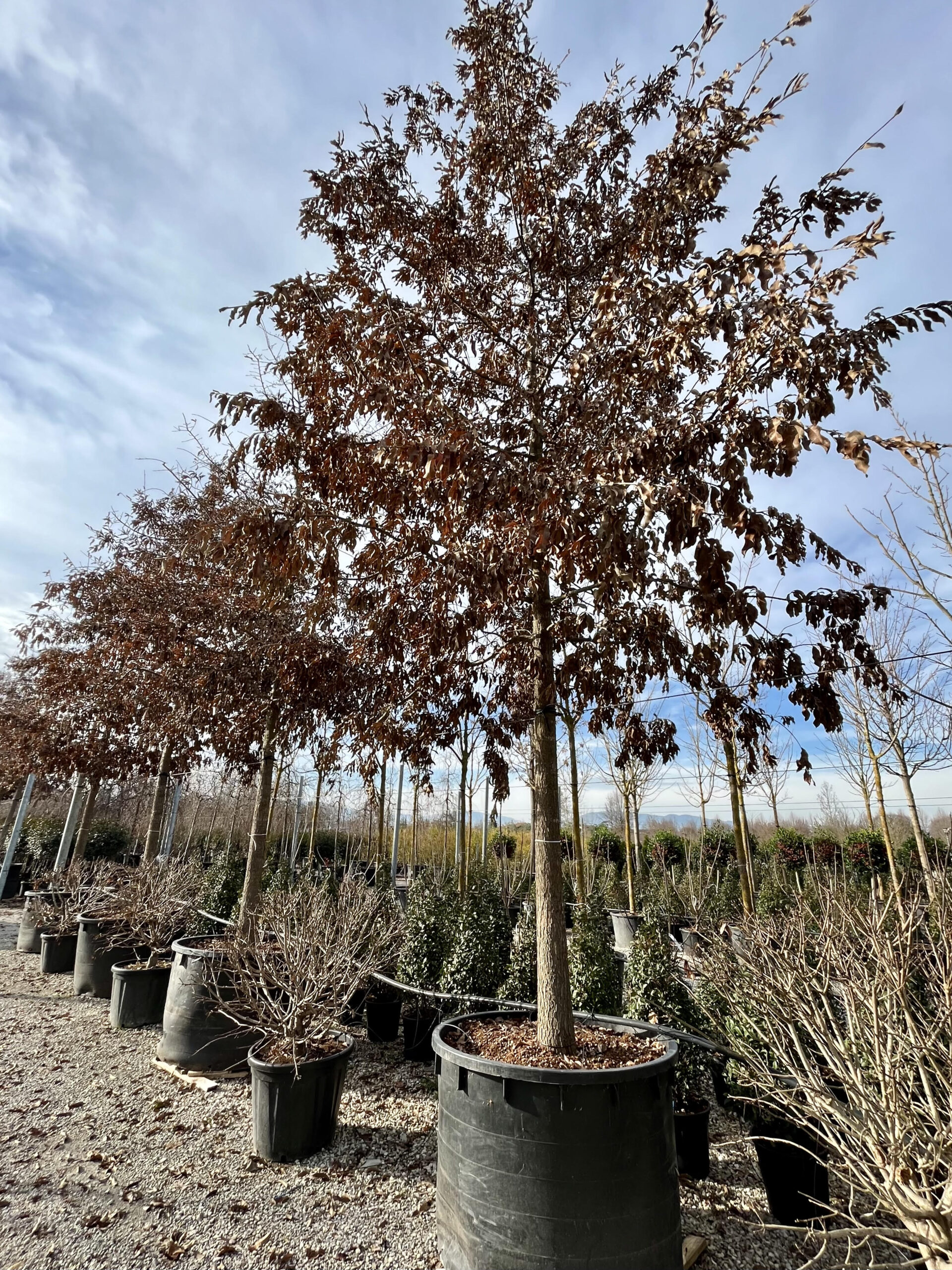
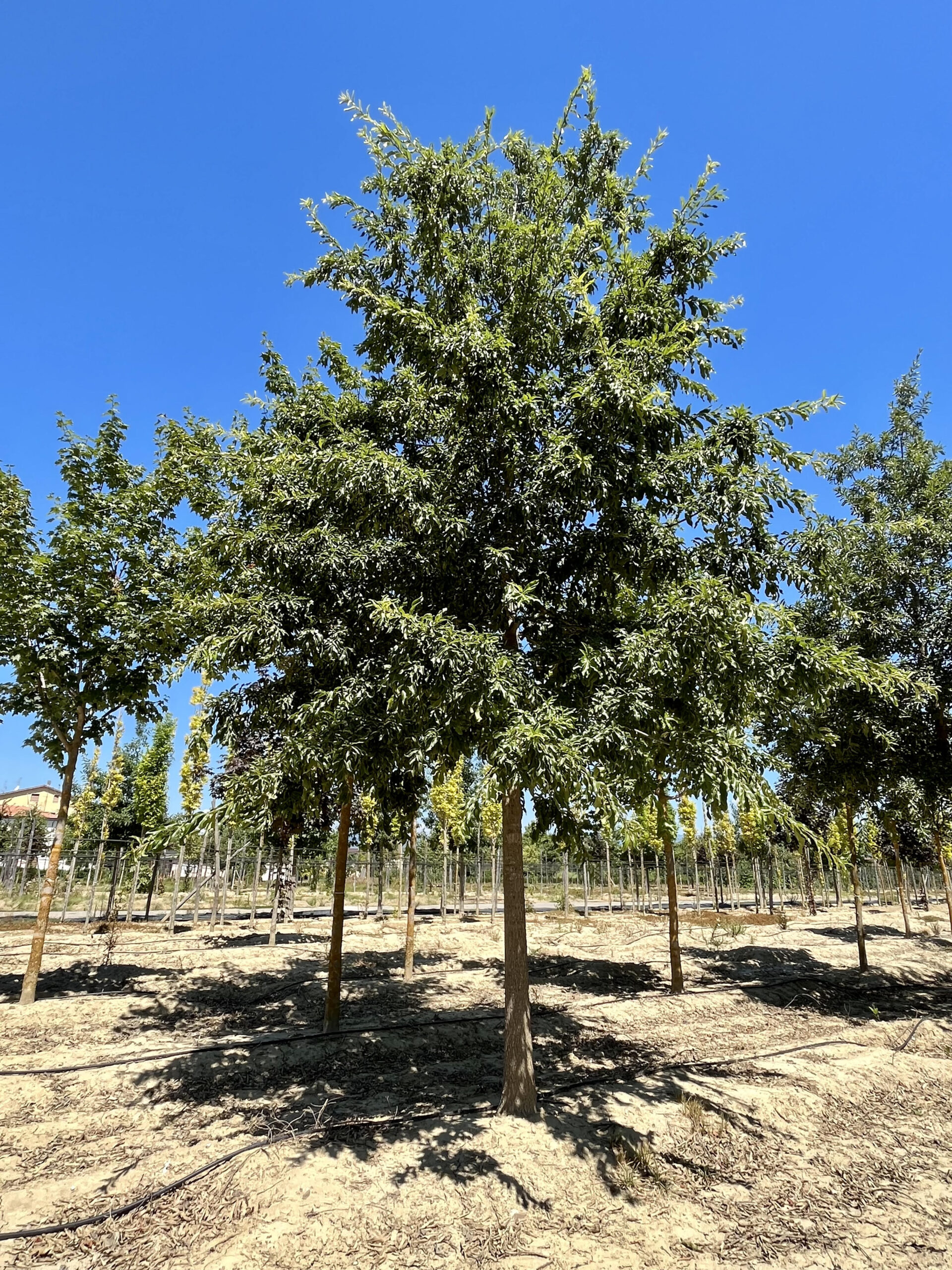
Quercus imbricaria is a deciduous oak tree belonging to the Fagaceae family, native to central and eastern North America.
It is a medium-sized tree, typically upright in shape, with a rounded or oval crown. It reaches a height between 15 and 25 meters, with a similar width, developing a sturdy trunk and smooth gray bark when young that becomes darker and more fissured with age.
The leaves are simple, entire, elliptical or lanceolate in shape, with smooth edges and a leathery texture. The upper surface is dark green and glossy, while the underside is lighter.
In autumn, the leaves turn shades ranging from bronze to reddish-brown. The leaves often persist on the tree even after those of other species have fallen, giving it an ornamental appearance even in winter.
Flowering occurs in spring, between April and May, with male flowers arranged in pendulous catkins and female flowers much less conspicuous. The fruits are acorns, either single or in pairs, with hemispherical cups finely scaled that cover about a third of the acorn.
It prefers well-drained soils but can also tolerate slightly moist terrain. It is resistant to short periods of drought once established and can grow in full sun or partial shade.
Thanks to its elegant shape and unusual foliage for an oak, Quercus imbricaria is also used for ornamental purposes in parks and large gardens.
→ Discover Quercus rubra, a fast-growing oak tree


Fill out the form below and we’ll get back to you within 24 hours.