Plant details
| Altezza a maturità | |
|---|---|
| Crescita | Moderate |
| Esposizione | |
| Fogliame | Deciduous |
| Manutenzione | |
| Terreno | Deep, Fresh, Well-drained |
| Resistenze | Cold-tolerant, Drought-tolerant, Heat-tolerant, Pollution-tolerant, Wind-resistant |
| Uso consigliato | Avenues, Large areas/parks, Urban spaces |
Fill out the form with your request, and we will get back to you as soon as possible.
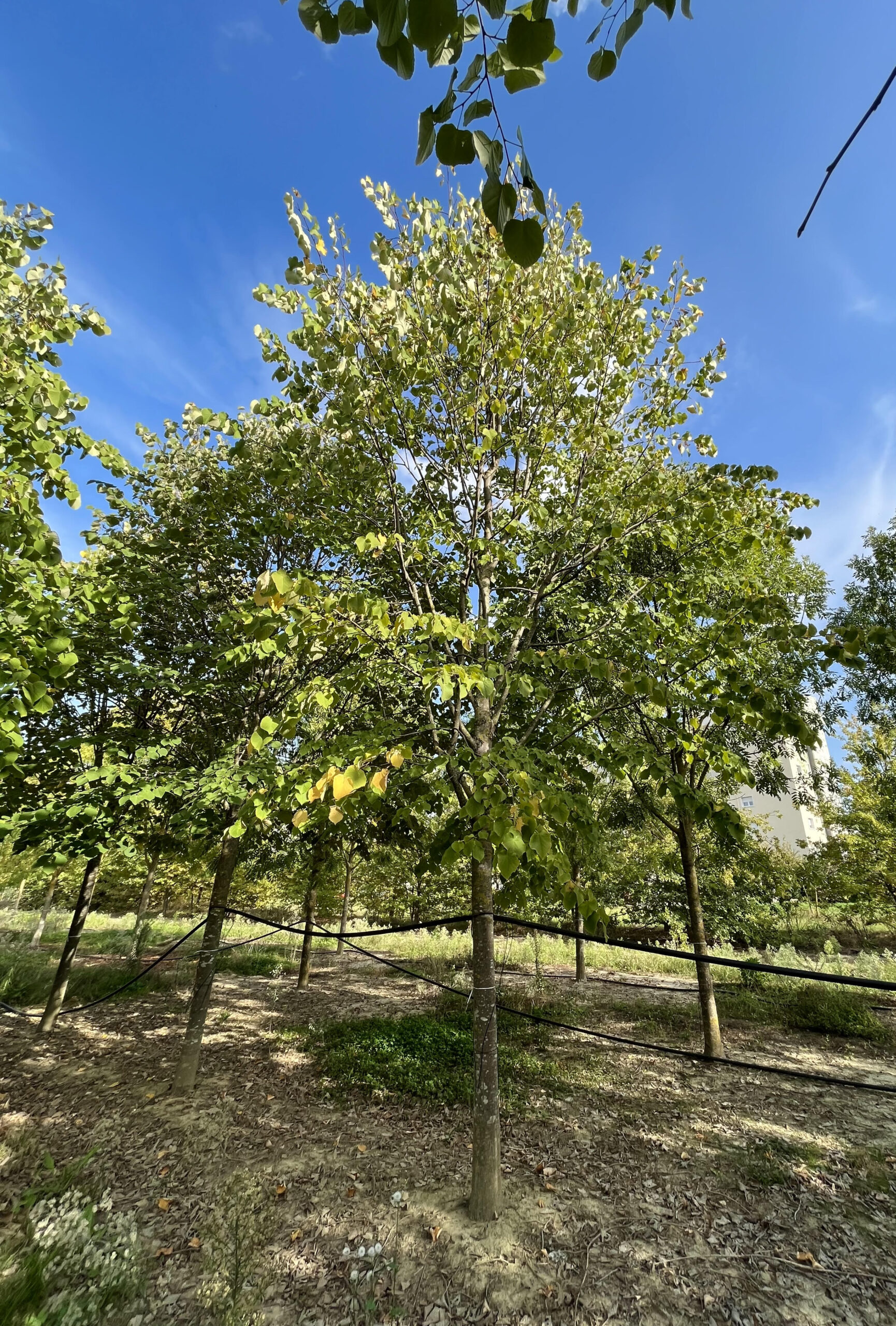
Tilia tomentosa, commonly known as the Silver Linden, is a deciduous ornamental tree of great landscape value, highly appreciated for its voluminous canopy, long lifespan, and the unique decorative effect created by the contrasting colors of its leaves. The leaves, heart-shaped and serrated, stand out with a dark green upper surface and a silvery, hairy underside (hence the name “tomentosa”), creating a striking silvery effect when moved by the wind.
It can reach 25–30 meters in height, with a majestic, upright growth habit and a broad canopy, initially conical when young and becoming more rounded with age. It is a deciduous species, meaning it sheds its leaves in autumn, offering a pleasant yellow-golden color before they fall.
In summer, between June and July, Tilia tomentosa produces fragrant light yellow flowers, highly appreciated by bees and pollinating insects. The flowers, gathered in pendulous inflorescences, are an important source of nectar. Unlike other linden species, this variety tends to attract fewer aphids, which is an advantage for those wishing to reduce the falling of honeydew on the surfaces below.
From an environmental perspective, Tilia tomentosa is a very resilient and versatile plant: it tolerates air pollution, winds, drought, and summer heat well, which is why it is widely used in urban landscaping, especially in tree-lined avenues, parking lots, and large public gardens.
→ To create contrast, discover Acer platanoides ‘Crimson King’, valued for its purplish-red foliage and tolerance to pollution.


Fill out the form below and we’ll get back to you within 24 hours.