
Category Fruit's tree

Fill out the form with your request, and we will get back to you as soon as possible.
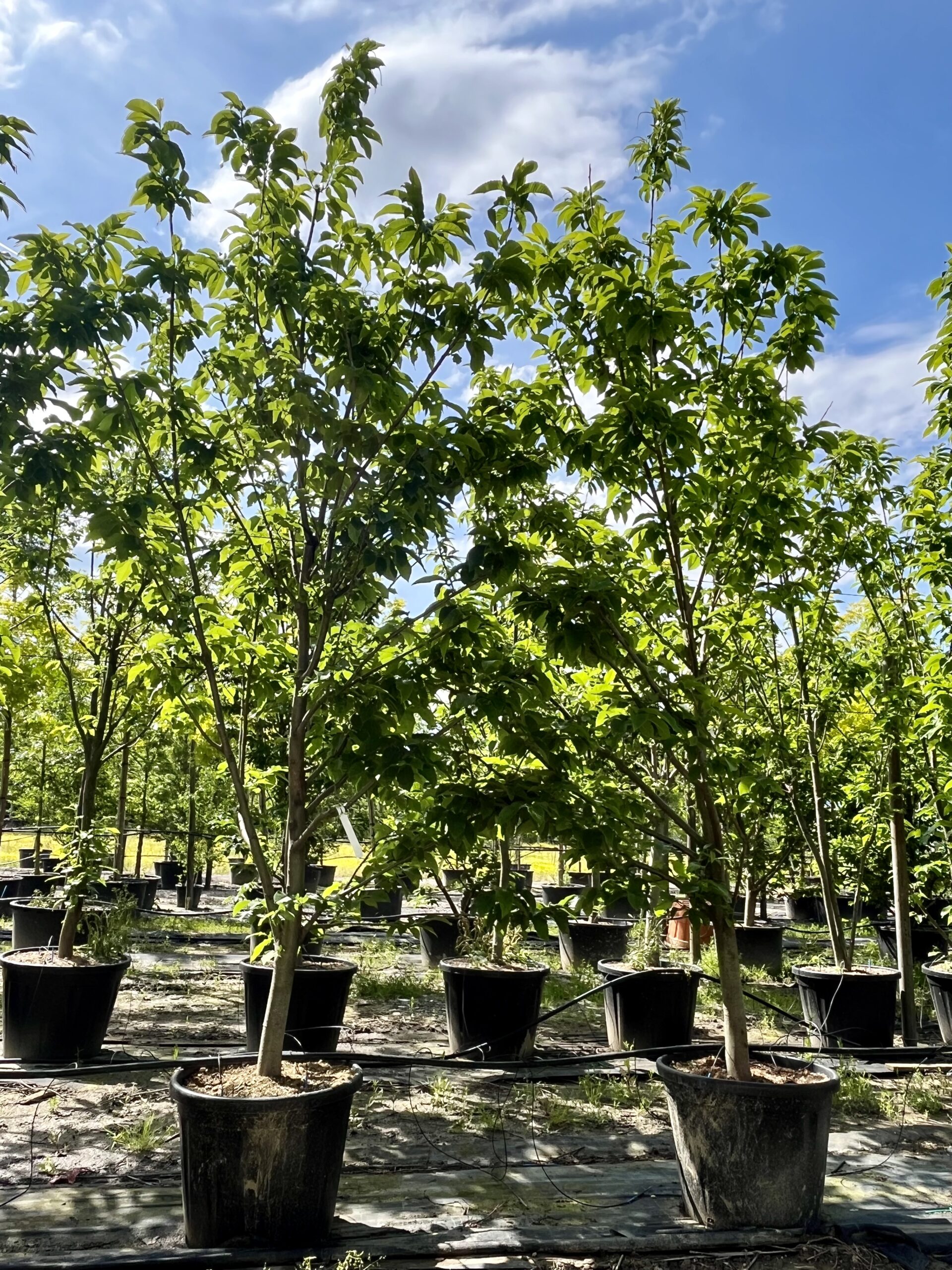
Castanea sativa is a large deciduous tree, capable of reaching 20–30 meters in height and over 2 meters in trunk diameter under optimal conditions. Its crown is broad, globular or irregularly expanded, with dense and thick branching that provides generous shade during the summer.
The leaves, arranged alternately, are oblong-lanceolate in shape, with serrated edges and a prominent central vein. Their color is bright green in spring and summer, turning yellow-golden or bronze in autumn before falling.
Flowering occurs between June and July and consists of unisexual flowers on the same plant (a monoecious species). The male flowers are grouped in upright, yellow-green spikes that are very showy and fragrant, while the smaller, less conspicuous female flowers are located at the base of the inflorescences.
The fruit is the chestnut, enclosed in a spiny husk called a burr, which opens naturally when ripe between September and October, revealing one to three shiny, reddish-brown chestnuts.
Castanea sativa grows spontaneously in temperate-mountain climates, preferring deep, fresh, siliceous or slightly acidic soils that are well-drained and rich in organic matter. It requires full sun exposure, but in the juvenile stages, it can tolerate light shading. Cold resistance is good, but it is sensitive to late spring frosts and prolonged drought periods.
As an ornamental tree, it is valued for its wide canopy, hardiness, and autumn coloring, making it ideal for parks, historic gardens, and large green spaces. From an ecological perspective, it plays an important role in maintaining biodiversity and soil protection.
→ Discover Quercus robur, a monumental tree, also highly valued for its ecological and landscape value


Fill out the form below and we’ll get back to you within 24 hours.