Plant details
| Altezza a maturità | |
|---|---|
| Crescita | Fast, Slow |
| Esposizione | |
| Fogliame | Deciduous |
| Manutenzione | |
| Portamento | |
| Resistenze | |
| Uso consigliato | Avenues, Biodiversity, Large areas/parks |
| Terreno | Calcareous, Poor, Well-drained |

Fill out the form with your request, and we will get back to you as soon as possible.
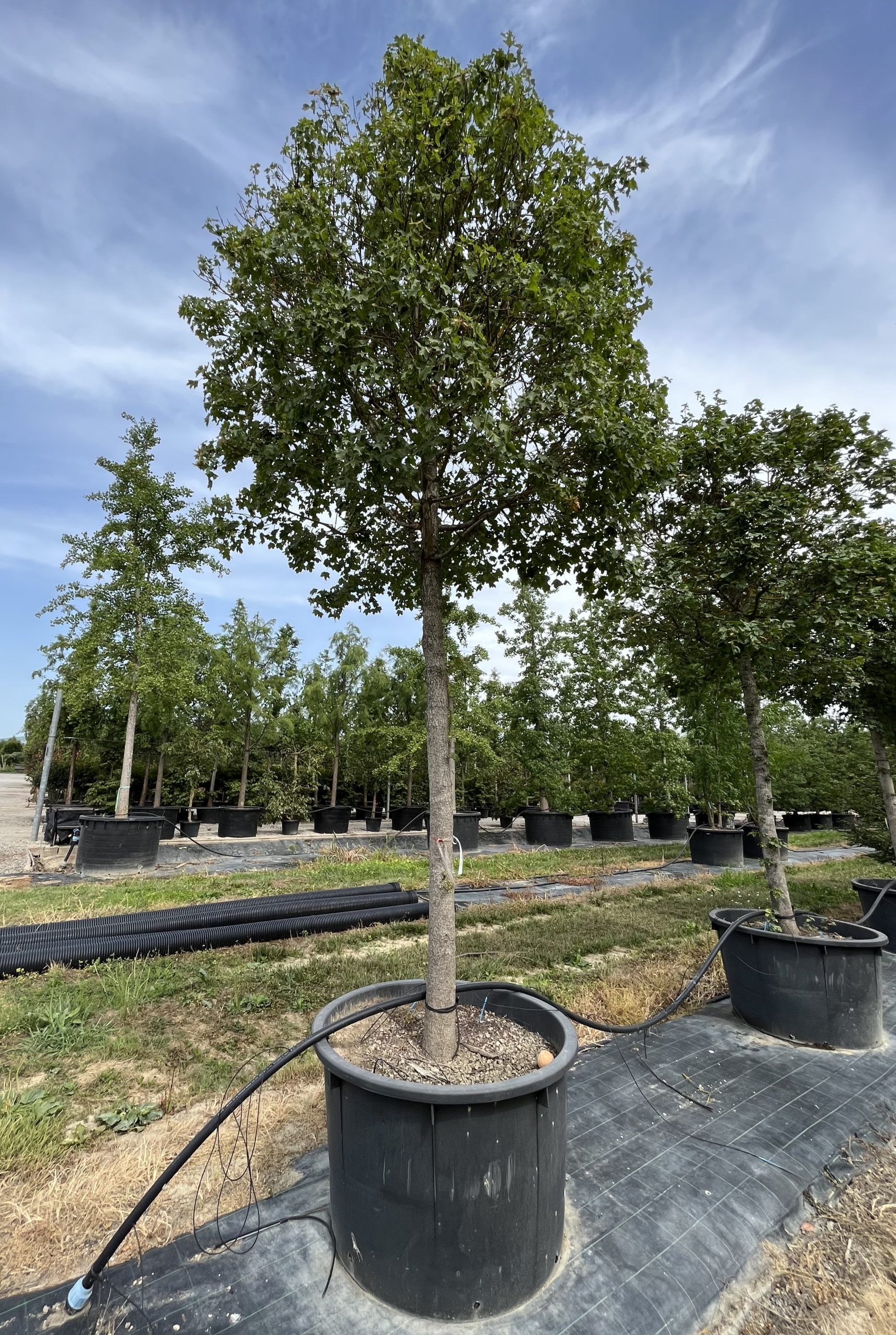
Acer campestre is a quiet and refined presence in the landscape, capable of combining natural beauty, adaptability, and ecological value. Native to Europe, this deciduous tree is appreciated for its dense, tidy, and rounded canopy that provides shade and harmony in any setting.
Its palmate leaves, deep green during the growing season, turn warm golden shades in autumn, offering a subtle yet captivating display of color. It is a tree that expresses character without overwhelming, making it ideal for tree-lined avenues, natural gardens, mixed hedges, and agricultural rows.
Exceptionally hardy and undemanding, Acer campestre tolerates calcareous soils, urban pollution, cold, and summer drought well. It requires minimal maintenance and responds well to pruning, making it a perfect choice for urban green spaces or more formal environments.
But it is above all its ecological value that makes it special: it provides shelter and nourishment for pollinating insects, birds, and local wildlife, actively contributing to biodiversity. Its fruits, the distinctive winged samaras, add a curious and natural touch to its presence.
Sober, resilient, and genuine, Acer campestre enhances the landscape with balance and understated elegance, representing a smart and sustainable choice for those seeking lasting greenery that is respectful and well-integrated into the environment.
→ Discover Carpinus betulus, another deciduous tree ideal for creating avenues.


Fill out the form below and we’ll get back to you within 24 hours.