
Related products
-
-
 Trees
TreesMalus toringo ‘Scarlett’
-
 Trees
TreesMalus ‘Evereste’
-
 Trees
TreesLiquidambar Styraciflua
Plant details
| Altezza a maturità | |
|---|---|
| Crescita | Moderate |
| Esposizione | |
| Fogliame | Evergreen |
| Manutenzione | |
| Resistenze | |
| Periodo fioritura | |
| Portamento | |
| Terreno | Acidic, Fertile, Fresh, Well-drained |
| Uso consigliato | Avenues, Large areas/parks |
Fill out the form with your request, and we will get back to you as soon as possible.
Magnolia grandiflora ‘Gallisoniensis’ is a prestigious evergreen magnolia, valued for its elegant, slender, and relatively compact growth compared to other Magnolia varieties. Native to the southern United States, this cultivar was selected and refined in France, resulting in a plant that combines ornamental beauty with climatic adaptability.
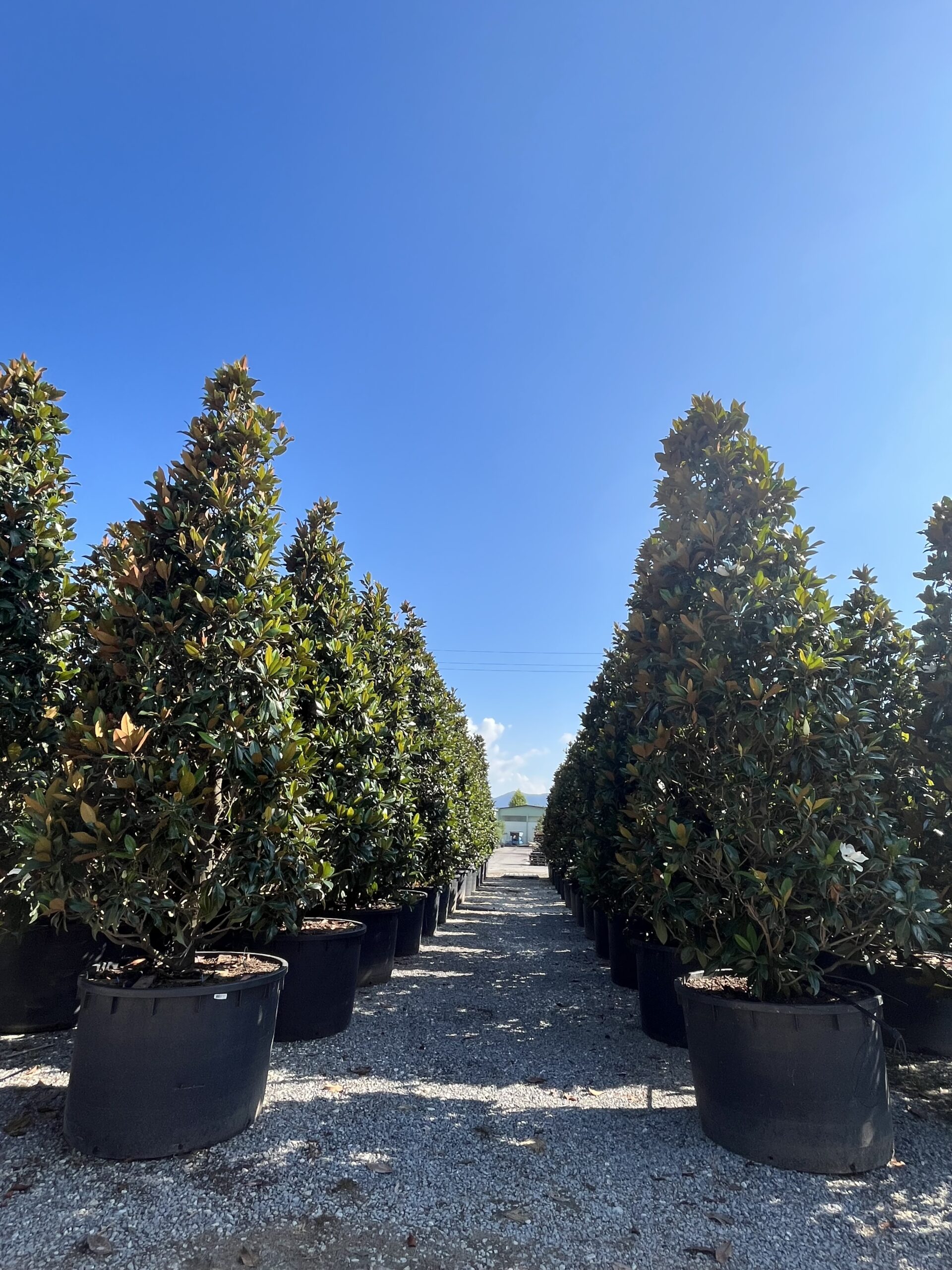
Its crown has a pyramidal shape, developing more vertically than horizontally, making it ideal for large gardens or for urban uses such as street trees or avenues. It can reach a height of 10 to 15 meters, with a contained width of 3 to 5 meters.
The leaves are large, leathery, and thick, with a deep, glossy green on the upper side, a silky texture, and a characteristic rust-colored felt on the underside.
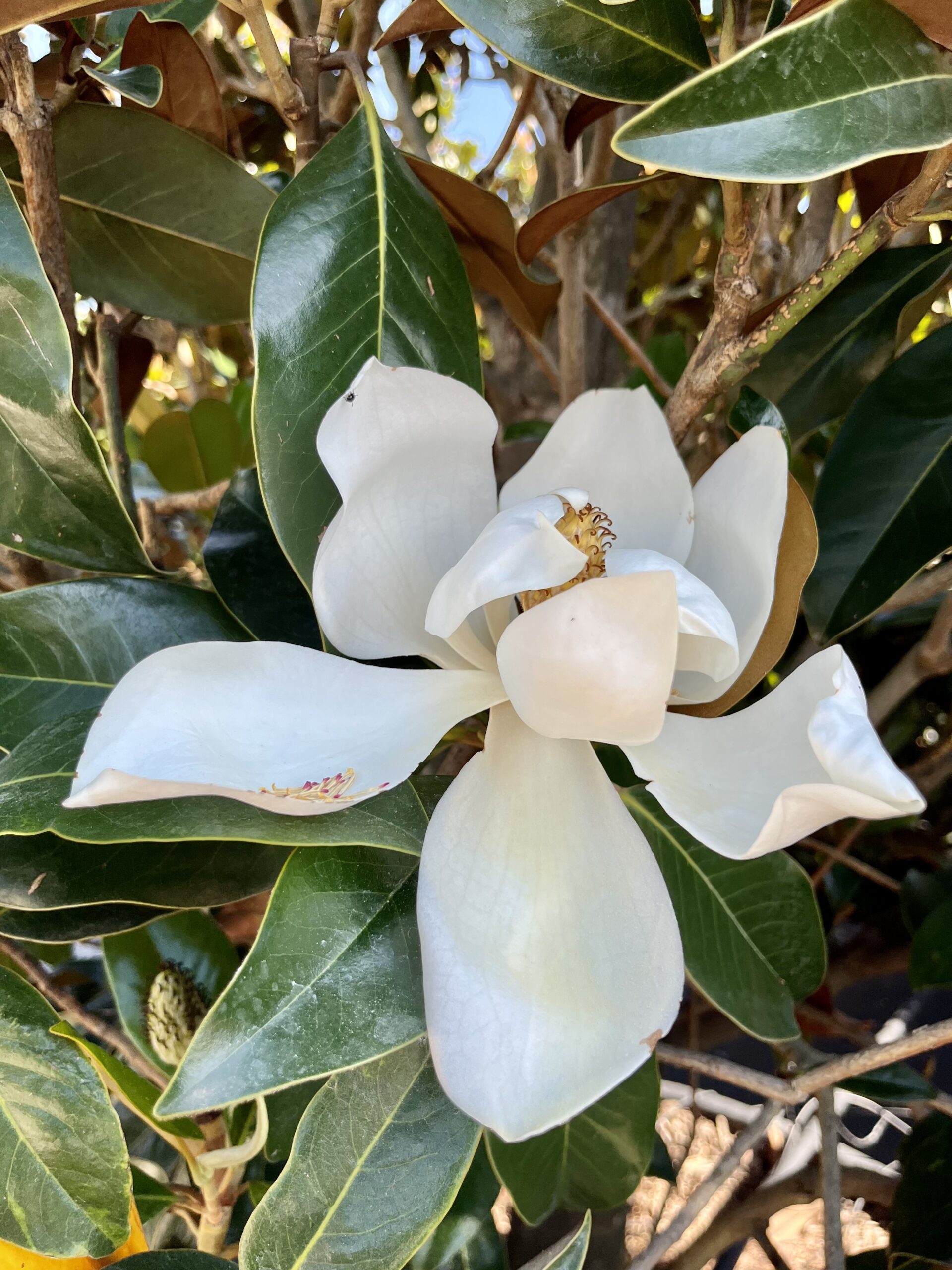
The blooming, which occurs from May to August, is spectacular: the flowers are large, cup-shaped, reaching 20-25 cm in width, with a very bright and intense cream-white color, and they are highly fragrant, with a sweet scent.
After flowering, the plant produces woody capsules, similar to small cones, which open at maturity to reveal bright red seeds, very decorative.
Magnolia grandiflora ‘Gallisoniensis’ grows at a moderate and steady pace, showing good resistance to variable climatic conditions, but it prefers environments with hot summers and mild winters. While it can tolerate temperatures as low as -10°C, in areas with particularly harsh winters, it requires protection or sheltered locations.
From an agronomic point of view, it prefers fresh, deep, well-drained soils with a slightly acidic pH; it struggles in calcareous or overly compacted soils.
Pruning is generally limited and is done to maintain the pyramidal shape or to remove dry or damaged branches, preferably right after flowering or in late winter.
→ If you prefer a more compact ornamental variety, discover Magnolia lilliflora ‘Betty’.
Fill out the form below and we’ll get back to you within 24 hours.