Plant details
| Altezza a maturità | |
|---|---|
| Crescita | Fast, Moderate |
| Esposizione | |
| Fogliame | Deciduous |
| Manutenzione | |
| Periodo fioritura | |
| Portamento | |
| Resistenze | |
| Terreno | Calcareous, Poor, Well-drained |
| Uso consigliato | Avenues, Large areas/parks, Urban spaces |
Fill out the form with your request, and we will get back to you as soon as possible.
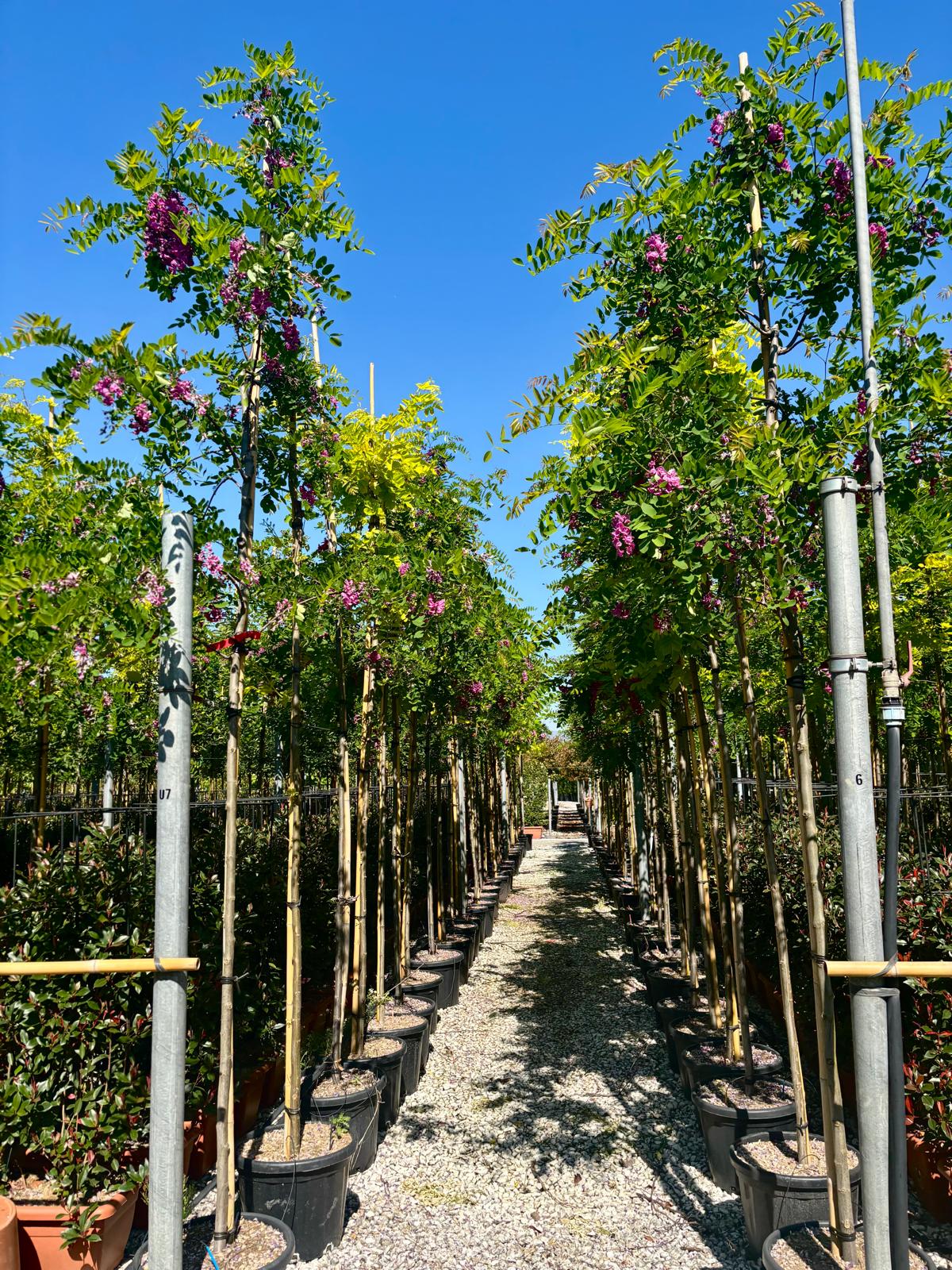
Robinia pseudoacacia ‘Casque Rouge’ is a deciduous ornamental tree belonging to the Fabaceae family.
This cultivar, selected in France as a hybrid between Robinia pseudoacacia and Robinia hispida, is especially appreciated for its spectacular intense pink flowering, making it ideal for gardens and green areas.
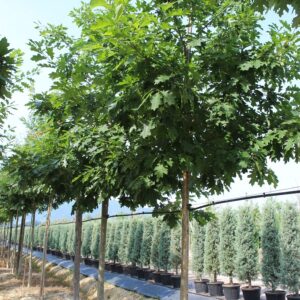
The tree has a medium size habit, with a light, open, and rounded crown, reaching about 6–10 meters in height and 4–6 meters in width. It grows at a medium-fast rate and has an average lifespan, adapting well to different conditions.
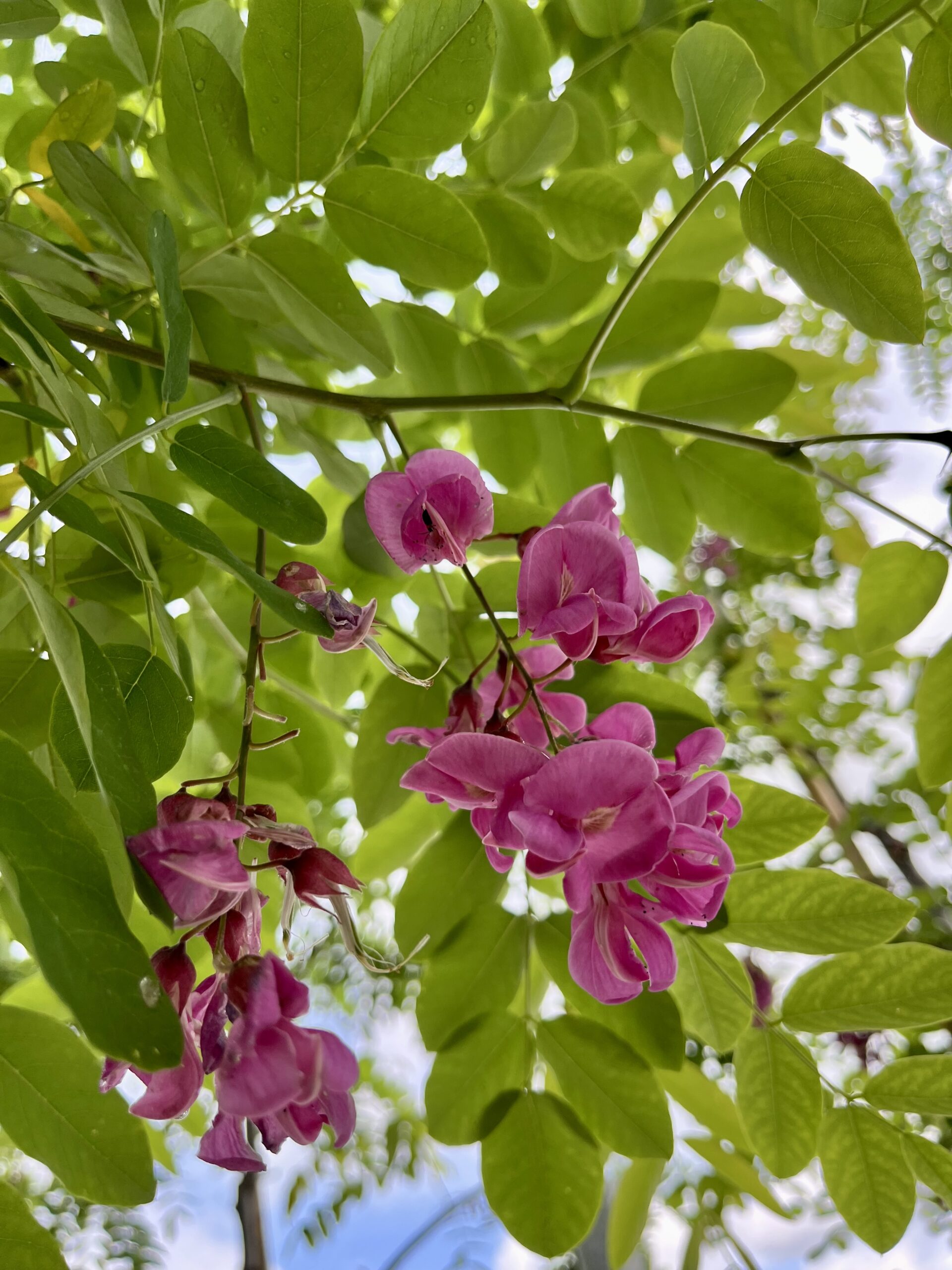
The foliage consists of pinnate leaves with numerous oval leaflets of medium green color, providing a nice contrast with the flowers. In autumn, the leaves tend to yellow before falling.
Flowering, which occurs between May and June, is the highlight of this variety: the flowers are arranged in long pendulous racemes about 10–15 cm long, and they show an intense deep pink color, very decorative and attractive to bees and other pollinating insects. The fruits are flat pods typical of the species, maturing in summer and containing shiny black seeds.
Robinia pseudoacacia ‘Casque Rouge’ prefers sunny or partially shaded positions and adapts to a wide range of soils, provided they are well-drained. It is hardy, tolerating both cold and moderate drought, and is often used in parks, gardens, and urban landscaping due to its high aesthetic value.
→ For those seeking an alternative with bright yellow foliage and white flowers, visit the page on Robinia pseudoacacia ‘Frisia’.


Fill out the form below and we’ll get back to you within 24 hours.