
Related products
-
 Conifers
Cedrus atlantica ‘Glauca Pendula’
-
 Conifers
Pinus sylvestris ‘Watereri’
-

-
 Conifers
Cupressocyparis Leylandii
Plant details
| Altezza a maturità | |
|---|---|
| Crescita | Fast |
| Esposizione | |
| Fogliame | Evergreen |
| Manutenzione | |
| Portamento | |
| Resistenze | |
| Terreno | Calcareous, Poor, Sandy, Well-drained |
| Uso consigliato | Reforestation, Large areas/parks, Urban spaces |
Fill out the form with your request, and we will get back to you as soon as possible.
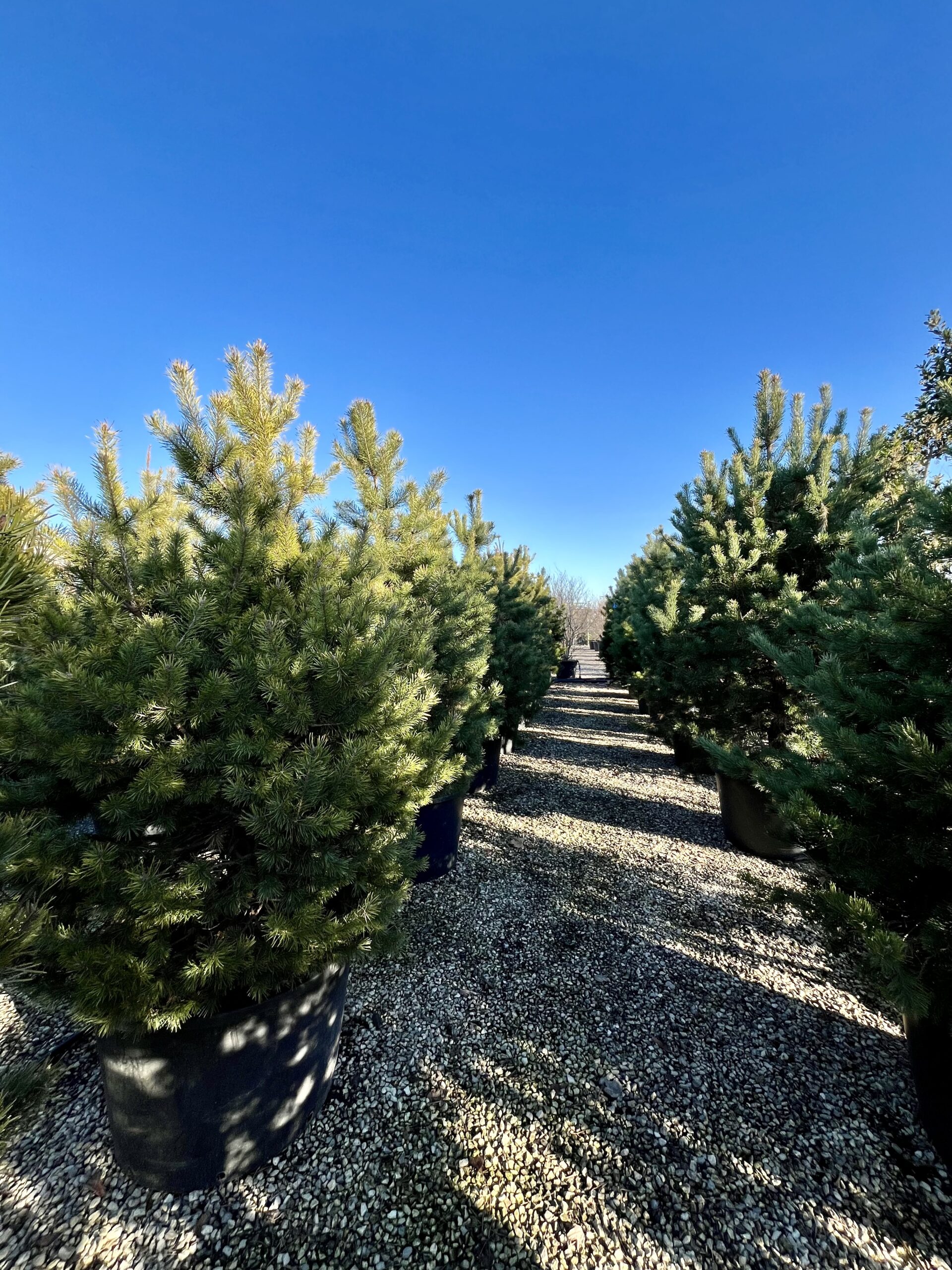
Pinus sylvestris is an evergreen conifer particularly appreciated for its adaptability and resilience. This tree is known for its relatively fast growth and elegant form, making it a highly valued landscape element.
In its youth, Scots pine exhibits a conical-shaped crown, which becomes more open and irregular as the tree matures. It can reach heights of 15 to 30 meters, with a crown that typically spreads between 6 and 10 meters in diameter.
One of its most fascinating features is its bark: smooth and gray in young specimens, it gradually takes on an orange-pink color in the upper part of the trunk with age, peeling off in thin plates.
The leaves of Pinus sylvestris are needle-like, arranged in pairs, bluish-green in color, rigid and slightly twisted. These needles persist for several years, maintaining their characteristic bright hue. The tree produces small conical cones, which mature in about two years and remain on the plant for a long time.
Pinus sylvestris is a pioneer species, capable of colonizing poor, acidic, rocky, or sandy soils, and shows great resistance to harsh climatic conditions such as intense cold, strong winds, and temporary drought. This ability makes it valuable for reforestation projects and soil stabilization, as well as for creating natural forests with high landscape and environmental value.
The wood of Pinus sylvestris is prized for its strength and durability, used both in construction and carpentry, while the tree itself is widely used in large gardens and parks thanks to its elegant shape and its ability to provide shade and coolness.
→ Discover Pinus nigra ‘Austriaca’, frequently used in urban and industrial spaces due to its resistance to pollution
Fill out the form below and we’ll get back to you within 24 hours.